Ireme Abakuá – Dance
The íreme, popularly called diablito ("little devil"), is the masked dancer of the Abakuá society. He represents the ancestors or mythological figures and is seen as a messenger and guardian of the ritual.
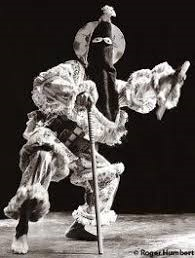
👻 What does the íreme represent?
According to EcuRed, the íreme is the symbolic representation of the ancestors, who are called upon at every Abakuá ceremony. On the Day of the Three Kings (6 January), members used to dress as íremes, signifying the return of the dead to Earth. Today the íreme also appears on the folkloric stage.
🧵 The costume
- Checked and striped: the suit has a checked and striped pattern. According to researcher Ivor Miller, the patterns represent the spots of a leopard, linked to a grade in the society.
- Mask: the dancer is completely covered. According to Miller, the vertical mask stands for the "enlightened state" of that grade.
- Raffia, bells and feathers: raffia with bells circles the ankles, wrists, waist and neck, and fronds and rooster feathers hang from the waist.
🥁 Music and dance
The society's sacred sound is the voice of the ekué drum. According to tradition, the woman Sikán discovered that voice in a fish, the reincarnation of King Obón Tanzé. The íreme moves with sharp, angular, staccato movements that at times embody the sounds of the ekué.
💃 Abakuá and rumba
The columbia, the fast solo dance for men, arose according to EcuRed in and around Unión de Reyes (Matanzas), in places controlled by Abakuá potencias. The columbia dancer also moves with strength and speed, his movements accented by the quinto.