The contradanza is the first music that truly sounded Cuban: a European dance form into which 19th-century Cuban composers worked the habanera rhythm and the cinquillo. Contradanza is the name of both the music and the dance.
Characteristics
Metre: 2/4, a lively danceable tempo
Form: two sections of usually eight bars (A and B), each repeated; the B section is often rhythmically busier
Bass: the habanera rhythm (DAAM-da-DUM-DUM), related to the tresillo (3+3+2)
Melody: already uses the cinquillo, the syncopated figure that would later carry the danzón
Line-up: at home and in the salon the piano; at balls an orquesta típica with violins, flute, clarinet, brass, double bass, timpani and güiro
Listen
Three examples: two piano pieces by Saumell and a contradanza as a salon orchestra played it. Listen to the bass in the left hand or the low instruments: that is where the habanera rhythm lives.
Saumell dedicated La Tedezco to the Italian soprano Fortunata Tedesco. Played by pianist Yamira Rodríguez.
This video is hosted by YouTube. Playing it shares data with YouTube (Google), which may set cookies. Privacy
One of Saumell's best-known contradanzas, from the 1850s. Played by Amaury Morales.
This video is hosted by YouTube. Playing it shares data with YouTube (Google), which may set cookies. Privacy
A contradanza as it sounded in the salons, by the orchestra of Odilio Urfé.
This video is hosted by YouTube. Playing it shares data with YouTube (Google), which may set cookies. Privacy
Names
Contradanza criolla or cubana: the Cuban variant, as opposed to the European contredanse
Danza: its successor from about 1840–1850; musically the difference is small and many pieces are called contradanza or danza interchangeably
Habanera: originally the "contradanza habanera" (contradanza from Havana). Abroad, habanera became the name of the slower, sung branch, like the aria in Bizet's Carmen
Composers
Manuel Saumell (1817–1870): wrote dozens of short piano contradanzas and gave the genre its own language
Ignacio Cervantes (1847–1905): known for his Danzas cubanas for piano
Miguel Faílde (1852–1921): came from this tradition and wrote the first danzón in 1879
The danza was the evolutionary step between contradanza and danzón — a more intimate, more Cubanized couple's dance that dominated Havana's salons in the second half of the 19th century.
The contradanza was the first European dance that truly became Cuban: under African influence it grew into something of its own. It is the starting point of the Cuban salon dance lineage that would eventually produce danzón, mambo, and cha-cha-chá.
Rumba is the most African-rooted of all Cuban music and dance forms — born in the streets, courtyards, and docks of Havana and Matanzas in the late 19th century, with no European instruments, no salon setting, and no pretense of European propriety.
The timpani (kettledrum) played a foundational role in Cuban music history as the original pitched drum of the 19th-century orquesta típica — before being replaced by the lighter timbales.
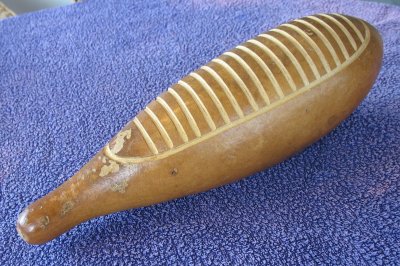
The güiro is a notched gourd scraped with a stick or fork to produce a rasping, rhythmic sound. It is a standard feature of charanga orchestras and is central to danzón, cha-cha-chá, son, and salsa.
The piano is the harmonic and rhythmic heart of Cuban popular music. In timba, it is one of the most demanding and expressive instruments in the ensemble.
Timba, the explosive and rhythmically rich genre of Cuban dance music, transformed how the bass functions in popular music. In Timba, the bass is not just foundational — it’s fiery, funky, and free.
The flute is the lead voice of the charanga, from Antonio Arcaño's wooden five-key flute to Orquesta Aragón. In timba it returns with bright melodies, call-and-response with the singers, and virtuoso solos that cut through the dense rhythm section.
The trombone is the defining brass voice of timba. Where earlier Cuban popular music relied primarily on trumpets, timba shifted the brass weight toward trombones — giving the music a deeper, darker, more aggressive horn sound.