Son
Cuban Son
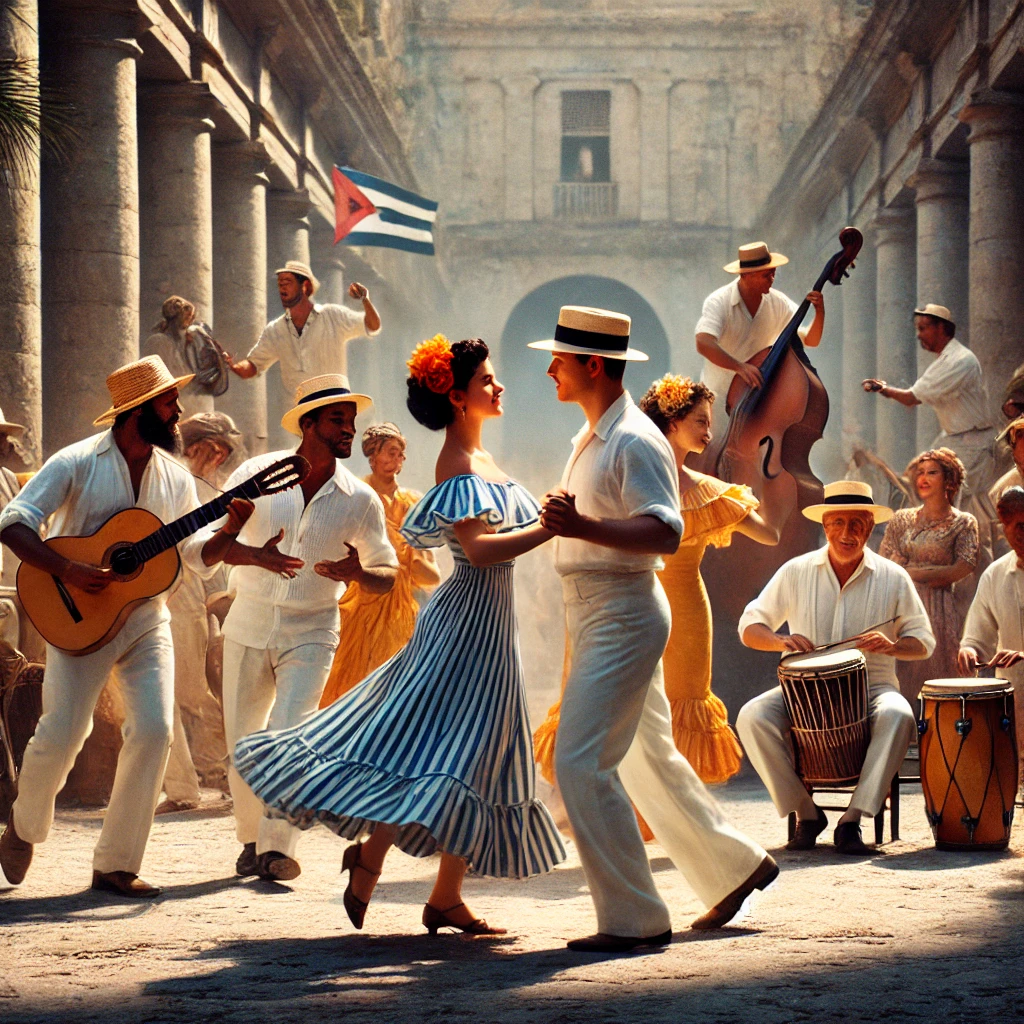
Cuban Son is one of the most important and influential musical styles to emerge from Cuba, forming the foundation for many popular Afro-Cuban and Latin genres, including Salsa. It originated in the late 19th century in the rural eastern part of Cuba, particularly in the region of Santiago de Cuba, and gained widespread popularity in the early 20th century.
Key Features of Cuban Son:
-
Fusion of Cultures: Cuban Son is a blend of Spanish and African musical traditions. It combines Spanish guitar-based music with African rhythms and percussion, reflecting the diverse cultural influences of Cuba.
-
Instrumentation:
- Tres (a Cuban guitar-like instrument with three sets of double strings).
- Claves (wooden sticks used to create the clave rhythm, essential to Afro-Cuban music).
- Bongos (small drums played with fingers).
- Maracas and Guiro ( percussion instruments).
- Bass (or in earlier forms, the marímbula, a type of thumb piano).
- Trumpet (introduced later, giving the Son its signature brassy sound).
-
Clave Rhythm: The rhythmic backbone of Son is based on the clave, a syncopated rhythm that structures the entire song. The most common pattern is the 3-2 Son Clave, but the 2-3 pattern is also used.
-
Structure:
- Verso ( verse) section: The structured, song-like part with a repeating melody and lyrics.
- Montuno section: An open, improvisational section that features call-and-response vocals (between the lead singer and the chorus) and more rhythmic intensity.
-
Dance: The dance style associated with Son is marked by subtle, smooth movements, with couples dancing closely together. The footwork mirrors the rhythm of the music, and Son dancing laid the groundwork for Salsa dancing later on.
Evolution and Influence:
- Urbanization: Cuban Son spread from rural areas to Havana in the early 20th century, where it evolved with influences from other musical styles, like jazz.
- Tríos and Sextetos: Early Son groups (like Trío Matamoros or Sexteto Habanero) popularized the music in Cuba and internationally.
- Son and Salsa: In the 1940s and 1950s, Son evolved further, incorporating more horns and faster tempos, leading to the development of Salsa music in the 1960s and beyond.
Social and Cultural Impact:
Cuban Son played a crucial role in the formation of Cuban national identity. It reflected the cultural mixture of the island, bringing together the rural and urban populations, and bridging racial and class divides. Son became a symbol of Cuban popular music and was instrumental in the global spread of Afro-Cuban rhythms.
Artists like Arsenio Rodríguez, Ignacio Piñeiro, and Buena Vista Social Club were key figures in bringing Son music to international audiences. Today, it remains one of Cuba’s most cherished and influential musical legacies.
Yo Soy Del A La Son Salsa (w/English Subtitles)
Rumba is the most African-rooted of all Cuban music and dance forms — born in the streets, courtyards, and docks of Havana and Matanzas in the late 19th century, with no European instruments, no salon setting, and no pretense of European propriety.
Lees meer >The Cuban bolero is one of the great romantic song traditions of the world — slow, intimate, and deeply emotional. It is entirely distinct from the Spanish bolero (a fast 3/4 dance) and emerged in Cuba as a vehicle for the island's most heartfelt lyric expression.
Lees meer > Cuba is the largest island in the Caribbean and the birthplace of some of the world's most influential music and dance traditions. African, Spanish, and French cultural streams collided here over centuries of colonial history, producing an extraordinary creative culture that exported itself across the globe.
Lees meer >The Buena Vista Social Club was originally a members' club in Havana's Buena Vista neighborhood, active in the 1940s and 50s as a gathering place for musicians playing Son, Danzón, Bolero, and Guaracha. It closed after the Revolution but was immortalized in 1997 when Ry Cooder brought together a group of surviving veteran musicians to record an album under the same name.
Lees meer >Cuban music is built on percussion. The extraordinary density and variety of Cuban rhythmic culture reflects the meeting of West and Central African drumming traditions with Spanish, Haitian, and creole musical practices over four centuries. The instruments below form the core percussive vocabulary heard across Son, Rumba, Timba, Danzón, and their descendants.
Lees meer >
The bongo is a pair of small open-bottomed drums played with fingers and palms. It originated in eastern Cuba and became one of the defining percussion voices of son and timba.
Lees meer >
The clave is a fundamental rhythmic pattern and organizing principle in Cuban music. It serves as both a musical pattern and a guiding concept, deeply rooted in Afro-Cuban traditions.
Lees meer >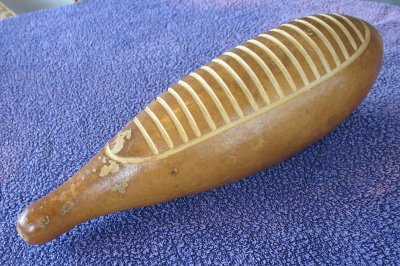
The güiro is a notched gourd scraped with a stick or fork to produce a rasping, rhythmic sound. It is a standard feature of charanga orchestras and is central to danzón, cha-cha-chá, son, and salsa.
Lees meer >
The marímbula is an Afro-Cuban bass instrument derived from African lamellophones (thumb pianos). It provided the bass voice in early son ensembles before being replaced by the upright bass.
Lees meer >
The tres is a Cuban guitar-like instrument with three pairs (courses) of strings. It is the defining melodic-rhythmic instrument of son cubano and its ancestor genres.
Lees meer >The piano is the harmonic and rhythmic heart of Cuban popular music. In timba, it is one of the most demanding and expressive instruments in the ensemble.
Lees meer >The piano is the harmonic and rhythmic heart of Cuban popular music. In timba, it is one of the most demanding and expressive instruments in the ensemble.
Lees meer > Timba, the explosive and rhythmically rich genre of Cuban dance music, transformed how the bass functions in popular music. In Timba, the bass is not just foundational — it’s fiery, funky, and free.
Lees meer >The trumpet has been central to Cuban popular music since the 1920s, when it became the lead melodic voice of the son septeto — the "seventh voice" that transformed the ensemble.
Lees meer >The cuerpo, also called canto, largo or verse, is where the lead vocalist sings the main lyrical content of the song.
In Timba, the canto often contains a narrative or thematic element and is supported by the rhythm section and background vocals.
Lees meer >