France - place
France's influence on Cuban music arrived primarily through the Caribbean colonial world and the Haitian migration. Its impact on Cuban dance history is substantial — the entire lineage from Contradanza to Cha-cha-chá passes through French culture.
The contredanse was a popular French ballroom dance form of the 17th–18th centuries. It spread through French Caribbean colonies, underwent creolization in Saint-Domingue ( Haiti), and arrived in Cuba with the Haitian migration after 1791.
In Cuba it became the Contradanza cubana — the first distinctly Cuban ballroom form, from which the Danzón and ultimately Cha-cha-chá and Mambo descended.
French contredanse → Saint-Domingue creolization → Contradanza cubana (early 19th c.) → Habanera → Danzón ( Matanzas, 1879) → Mambo / Cha-cha-chá
The Flute in Cuban Music
The charanga ensemble — the salon orchestra that became dominant in the late 19th century — features a French-style flute as lead melody instrument. This gave Cuban dance music a distinctly different character from the brass-heavy orquesta típica. Key charanga figures:
- Antonio Arcaño — charanga leader who developed the danzón de nuevo ritmo (precursor to Mambo)
- Richard Egües — flutist of Orquesta Aragón, the defining charanga ensemble of the 20th century
- José Luis "El Tosco" Cortés — flutist and founder of NG La Banda, who brought the charanga spirit into Timba
Tumba Francesa
After the Haitian Revolution, French colonists and Afro-Haitian workers brought Tumba Francesa to eastern Cuba. This tradition — blending French ballroom ceremony with African drumming — survives today in cuba"> Santiago de Cuba and Guantánamo, recognized by UNESCO as Intangible Cultural Heritage.
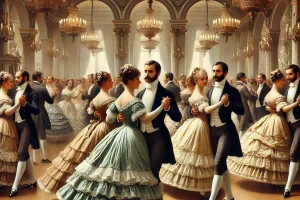
The contradanza was the first European-derived dance form to take root in Cuba and begin transforming under African influence. It is the starting point of the Cuban salon dance lineage that would eventually produce danzón, mambo, and cha-cha-chá.
Lees meer >
The contradanza was the first European-derived dance form to take root in Cuba and begin transforming under African influence. It is the starting point of the Cuban salon dance lineage that would eventually produce danzón, mambo, and cha-cha-chá.
Lees meer >
The contradanza was the first European-derived dance form to take root in Cuba and begin transforming under African influence. It is the starting point of the Cuban salon dance lineage that would eventually produce danzón, mambo, and cha-cha-chá.
Lees meer >Danzón was the first national dance of Cuba — the form that unified the island's popular music identity in the late 19th and early 20th century, and the ancestor of mambo, cha-cha-chá, and ultimately timba.
Lees meer >Danzón was the first national dance of Cuba — the form that unified the island's popular music identity in the late 19th and early 20th century, and the ancestor of mambo, cha-cha-chá, and ultimately timba.
Lees meer >Danzón was the first national dance of Cuba — the form that unified the island's popular music identity in the late 19th and early 20th century, and the ancestor of mambo, cha-cha-chá, and ultimately timba.
Lees meer >Timba is the music this site is dedicated to exploring. It emerged as a distinct genre in the late 1980s and crystallized in the early 1990s — born in a moment of social crisis, built on the full accumulated history of Cuban music, and still evolving today.
Lees meer >The Cuban bolero is one of the great romantic song traditions of the world — slow, intimate, and deeply emotional. It is entirely distinct from the Spanish bolero (a fast 3/4 dance) and emerged in Cuba as a vehicle for the island's most heartfelt lyric expression.
Lees meer >The cha-cha-chá was born from a simple observation: dancers were struggling to follow mambo. Its creator gave them a rhythm they could feel in their feet — and the result became one of the most danced music styles in history.
Lees meer >Cuba is the largest island in the Caribbean and the birthplace of some of the world's most influential music and dance traditions. African, Spanish, and French cultural streams collided here over centuries of colonial history, producing an extraordinary creative culture that exported itself across the globe.
Lees meer >The following dances have their origin in Matanzas:
The Caribbean region was a crossroads of African, European, and indigenous cultures during the colonial era. The movement of enslaved people and colonizers between islands created musical and dance traditions that spread across the region and deeply influenced Cuban culture.
Lees meer > Haiti's influence on Cuban music and dance is direct, historically documented, and still alive in eastern Cuba today. After the Haitian Revolution (1791–1804), a massive migration of French colonists and Afro-Haitian workers reshaped the culture of cuba"> Santiago de Cuba and Guantánamo.
Lees meer >France's influence on Cuban music arrived primarily through the Caribbean colonial world and the Haitian migration. Its impact on Cuban dance history is substantial — the entire lineage from Contradanza to Cha-cha-chá passes through French culture.
Lees meer >A Cuban popular dance music genre that emerged in the 1980s–90s
- emerged in the 1980s–90s
- influenced by songo, rumba, funk, blues, jazz, pop, rock and Afro-Cuban rhythms.
- Known for complex rhythm shifts, aggressive bass lines, and high energy that push dancers to improvise.
Lees meer >Mambo
In Cuban music, especially in salsa and son,
the "mambo" section typically refers to a brassy, rhythmically intense instrumental break,
often featuring repetitive horn lines, call-and-response patterns, and building energy toward the climax of a song.
The Casa de la Trova in Santiago de Cuba is the spiritual home of Cuban traditional music — Son, Bolero, Changüí, and Trova. Founded in 1968 on Calle Heredia in the heart of Santiago's historic center, it has been the gathering place for the city's musicians for over half a century.
Lees meer >