France - place
France's influence on Cuban music arrived primarily through the Caribbean colonial world and the Haitian migration. Its impact on Cuban dance history is substantial — the entire lineage from Contradanza to Cha-cha-chá passes through French culture.
The contredanse was a popular French ballroom dance form of the 17th–18th centuries. It spread through French Caribbean colonies, underwent creolization in Saint-Domingue ( Haiti), and arrived in Cuba with the Haitian migration after 1791.
In Cuba it became the Contradanza cubana — the first distinctly Cuban ballroom form, from which the Danzón and ultimately Cha-cha-chá and Mambo descended.
French contredanse → Saint-Domingue creolization → Contradanza cubana (early 19th c.) → Habanera → Danzón ( Matanzas, 1879) → Mambo / Cha-cha-chá
The Flute in Cuban Music
The charanga ensemble — the salon orchestra that became dominant in the late 19th century — features a French-style flute as lead melody instrument. This gave Cuban dance music a distinctly different character from the brass-heavy orquesta típica. Key charanga figures:
- Antonio Arcaño — charanga leader who developed the danzón de nuevo ritmo (precursor to Mambo)
- Richard Egües — flutist of Orquesta Aragón, the defining charanga ensemble of the 20th century
- José Luis "El Tosco" Cortés — flutist and founder of NG La Banda, who brought the charanga spirit into Timba
Tumba Francesa
After the Haitian Revolution, French colonists and Afro-Haitian workers brought Tumba Francesa to eastern Cuba. This tradition — blending French ballroom ceremony with African drumming — survives today in cuba"> Santiago de Cuba and Guantánamo, recognized by UNESCO as Intangible Cultural Heritage.
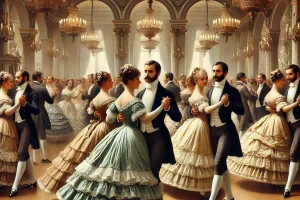
De contradanza was de eerste Europees-afgeleide dansvorm die wortel schoot in Cuba en begon te transformeren onder Afrikaanse invloed. Het is het beginpunt van de Cubaanse salondanslijn die uiteindelijk danzón, mambo en cha-cha-chá zou voortbrengen.
Lees meer >
De contradanza was de eerste Europees-afgeleide dansvorm die wortel schoot in Cuba en begon te transformeren onder Afrikaanse invloed. Het is het beginpunt van de Cubaanse salondanslijn die uiteindelijk danzón, mambo en cha-cha-chá zou voortbrengen.
Lees meer >
De contradanza was de eerste Europees-afgeleide dansvorm die wortel schoot in Cuba en begon te transformeren onder Afrikaanse invloed. Het is het beginpunt van de Cubaanse salondanslijn die uiteindelijk danzón, mambo en cha-cha-chá zou voortbrengen.
Lees meer >Danzón was de eerste nationale dans van Cuba — de vorm die in de late 19e en vroege 20e eeuw de identiteit van de Cubaanse populaire muziek verenigde, en de voorloper van mambo, cha-cha-chá en uiteindelijk timba.
Lees meer >Danzón was de eerste nationale dans van Cuba — de vorm die in de late 19e en vroege 20e eeuw de identiteit van de Cubaanse populaire muziek verenigde, en de voorloper van mambo, cha-cha-chá en uiteindelijk timba.
Lees meer >Danzón was de eerste nationale dans van Cuba — de vorm die in de late 19e en vroege 20e eeuw de identiteit van de Cubaanse populaire muziek verenigde, en de voorloper van mambo, cha-cha-chá en uiteindelijk timba.
Lees meer >Timba is the music this site is dedicated to exploring. It emerged as a distinct genre in the late 1980s and crystallized in the early 1990s — born in a moment of social crisis, built on the full accumulated history of Cuban music, and still evolving today.
Lees meer >De Cubaanse bolero is een van de grote romantische liedtradities van de wereld — langzaam, intiem en diep emotioneel. Hij is volkomen anders dan de Spaanse bolero (een snelle dans in 3/4-maat) en ontstond in Cuba als vehikel voor de meest hartstochtelijke lyrische uitdrukking van het eiland.
Lees meer >De cha-cha-chá werd geboren uit een eenvoudige observatie: dansers hadden moeite om mambo te volgen. De bedenker gaf hen een ritme dat ze in hun voeten konden voelen — en het resultaat werd een van de meest gedanste muziekstijlen in de geschiedenis.
Lees meer > Cuba is the largest island in the Caribbean and the birthplace of some of the world's most influential music and dance traditions. African, Spanish, and French cultural streams collided here over centuries of colonial history, producing an extraordinary creative culture that exported itself across the globe.
Lees meer >The following dances have their origin in Matanzas:
The Caribbean region was a crossroads of African, European, and indigenous cultures during the colonial era. The movement of enslaved people and colonizers between islands created musical and dance traditions that spread across the region and deeply influenced Cuban culture.
Lees meer > Haiti's influence on Cuban music and dance is direct, historically documented, and still alive in eastern Cuba today. After the Haitian Revolution (1791–1804), a massive migration of French colonists and Afro-Haitian workers reshaped the culture of cuba"> Santiago de Cuba and Guantánamo.
Lees meer >France's influence on Cuban music arrived primarily through the Caribbean colonial world and the Haitian migration. Its impact on Cuban dance history is substantial — the entire lineage from Contradanza to Cha-cha-chá passes through French culture.
Lees meer >Een Cubaans populair dansmuziekgenre dat ontstond in de jaren 1980–90
- Ontstaan in de jaren 1980–90
- Beïnvloed door songo, rumba, funk, blues, jazz, pop, rock en Afro-Cubaanse ritmes.
- Bekend om complexe ritmewisselingen, agressieve baslijnen en hoge energie die dansers aanzet tot improvisatie.
Lees meer >Mambo
In Cubaanse muziek, met name in salsa en son,
verwijst het "mambo"-gedeelte doorgaans naar een krachtige, ritmisch intense instrumentale break,
die vaak repetitieve hoornlijnen, call-and-response-patronen en opbouwende energie naar het hoogtepunt van een nummer bevat.
The Casa de la Trova in Santiago de Cuba is the spiritual home of Cuban traditional music — Son, Bolero, Changüí, and Trova. Founded in 1968 on Calle Heredia in the heart of Santiago's historic center, it has been the gathering place for the city's musicians for over half a century.
Lees meer >