Spain - place
Spain colonized Cuba from 1492 to 1898, fundamentally shaping its language, religion, harmonic music traditions, and social structure. Spanish musical culture forms one of the two primary roots — alongside African traditions — of virtually all Cuban music.
Instrumentation
The core melodic instruments of Cuban music are Spanish-derived:
Song Forms
The Cuban Bolero descends from the Andalusian bolero, transformed in cuba"> Santiago de Cuba in the late 19th century into a slow, intimate song form. Pepe Sánchez ( Santiago, 1856–1918) is credited as the father of the Cuban Bolero.
The trova — lyric song composition with guitar — comes directly from the Spanish troubadour tradition. Cuba's vieja trova produced composers like Sindo Garay and Compay Segundo; the nueva trova continues the line today.
The Spanish contradanza (absorbed from the French contredanse) arrived in Cuba and was creolized into the Contradanza cubana — the ancestor of Danzón, Mambo, and Cha-cha-chá.
Harmonic Language
European tonal harmony — major/minor keys, functional chord progressions — underlies all Cuban popular music. The clave rhythm organizes African-derived polyrhythm within European harmonic frameworks. The tension between these two systems is exactly what gives Cuban music its characteristic drive.
Key Spanish-Connected Figures
- Pepe Sánchez — founded the Cuban Bolero tradition in Santiago
- Sindo Garay — master of the trovador tradition, cuba"> Santiago de Cuba
- Manuel Saumell — Havana composer who established the Contradanza cubana as a concert form
- Ignacio Cervantes — pianist and composer, studied in Paris, built on the Contradanza tradition
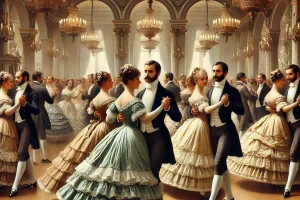
La contradanza fue la primera forma de danza de origen europeo que echó raíces en Cuba y comenzó a transformarse bajo la influencia africana. Es el punto de partida del linaje del baile de salón cubano que eventualmente produciría el danzón, el mambo y el cha-cha-chá.
Lees meer >
La contradanza fue la primera forma de danza de origen europeo que echó raíces en Cuba y comenzó a transformarse bajo la influencia africana. Es el punto de partida del linaje del baile de salón cubano que eventualmente produciría el danzón, el mambo y el cha-cha-chá.
Lees meer >El danzón fue el primer baile nacional de Cuba — la forma que unificó la identidad de la música popular cubana a finales del siglo XIX y principios del XX, y el antepasado del mambo, el cha-cha-chá y, en última instancia, la timba.
Lees meer >El danzón fue el primer baile nacional de Cuba — la forma que unificó la identidad de la música popular cubana a finales del siglo XIX y principios del XX, y el antepasado del mambo, el cha-cha-chá y, en última instancia, la timba.
Lees meer >Timba is the music this site is dedicated to exploring. It emerged as a distinct genre in the late 1980s and crystallized in the early 1990s — born in a moment of social crisis, built on the full accumulated history of Cuban music, and still evolving today.
Lees meer >La Rumba es la más arraigada en lo africano de todas las formas de música y danza cubanas — nacida en las calles, los patios y los muelles de La Habana y Matanzas a finales del siglo XIX, sin instrumentos europeos, sin ambiente de salón y sin pretensión alguna de decoro europeo.
Lees meer >El bolero cubano es una de las grandes tradiciones de canción romántica del mundo — lento, íntimo y profundamente emotivo. Es completamente distinto del bolero español (un baile rápido en compás de 3/4) y surgió en Cuba como vehículo para la expresión lírica más sentida de la isla.
Lees meer >El bolero cubano es una de las grandes tradiciones de canción romántica del mundo — lento, íntimo y profundamente emotivo. Es completamente distinto del bolero español (un baile rápido en compás de 3/4) y surgió en Cuba como vehículo para la expresión lírica más sentida de la isla.
Lees meer >El cha-cha-chá nació de una simple observación: los bailarines tenían dificultades para seguir el mambo. Su creador les dio un ritmo que podían sentir en los pies — y el resultado se convirtió en uno de los estilos musicales más bailados de la historia.
Lees meer > Cuba is the largest island in the Caribbean and the birthplace of some of the world's most influential music and dance traditions. African, Spanish, and French cultural streams collided here over centuries of colonial history, producing an extraordinary creative culture that exported itself across the globe.
Lees meer >Spain colonized Cuba from 1492 to 1898, fundamentally shaping its language, religion, harmonic music traditions, and social structure. Spanish musical culture forms one of the two primary roots — alongside African traditions — of virtually all Cuban music.
Lees meer >Egungun es la tradición de mascarada Yoruba que honra a los ancestros colectivos — los Egun, los muertos que permanecen presentes y activos en las vidas de los vivos. En Cuba, la tradición Egungun sobrevivió dentro del mundo más amplio de la Santería (Regla de Ocha) y las comunidades relacionadas Arará y Abakuá.
Lees meer >
La clave es un patrón rítmico fundamental y principio organizador de la música cubana. Funciona tanto como patrón musical como concepto rector, profundamente arraigado en las tradiciones afrocubanas.
Lees meer >
El tres es un instrumento cubano parecido a la guitarra, con tres pares (coros) de cuerdas. Es el instrumento melódico-rítmico definitorio del son cubano y sus géneros predecesores.
Lees meer >La guitarra española llegó a Cuba con los colonizadores y se convirtió en la semilla de la música cubana, fusionándose con los ritmos africanos. Desde inspirar el tres hasta moldear el son, los conjuntos y hasta la timba moderna, su influencia corre por cada nota de la historia musical cubana.
Lees meer >El piano es el corazón armónico y rítmico de la música popular cubana. En la timba, es uno de los instrumentos más exigentes y expresivos del conjunto.
Lees meer >En la timba (el género cubano que evolucionó del son y la salsa a finales de los años 80 y 90), el violín no es un instrumento central, pero aparece de maneras interesantes:
Lees meer >La trompeta ha sido central en la música popular cubana desde los años 20, cuando se convirtió en la voz melódica principal del septeto de son — la "séptima voz" que transformó el conjunto.
Lees meer >Un género de música popular bailable cubana que surgió en los años 1980–90
- Surgió en los años 1980–90
- Influenciado por el songo, la rumba, el funk, el blues, el jazz, el pop, el rock y los ritmos afrocubanos.
- Conocido por sus complejos cambios de ritmo, líneas de bajo agresivas y alta energía que impulsan a los bailadores a improvisar.
Lees meer >Mambo
En la música cubana, especialmente en la salsa y el son,
la sección de "mambo" generalmente se refiere a una pausa instrumental intensa y rítmicamente potente,
que a menudo presenta líneas de metales repetitivas, patrones de call-and-response y energía que va aumentando hacia el clímax de una canción.