Danza
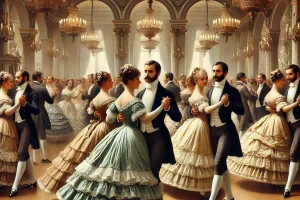
La danza fue el paso evolutivo entre la contradanza y el danzón — un baile de pareja más íntimo y más cubanizado que dominó los salones habaneros en la segunda mitad del siglo XIX.
De la Contradanza a la Danza
Mientras la contradanza aún estaba ligada a su formato europeo de figuras grupales, la danza prescindió de ello y se convirtió puramente en un baile de pareja. Dos personas, frente a frente, moviéndose juntas — más contacto físico, más sensualidad, mayor compromiso rítmico.
La transformación ocurrió gradualmente entre las décadas de 1840 y 1860, cuando los compositores cubanos simplificaron y condensaron la forma de la contradanza. El resultado fueron piezas más cortas y bailable que encajaban perfectamente en el ambiente del salón pero que se sentían decididamente cubanas.
Carácter musical
La danza retuvo el ritmo de habanera de la contradanza, pero lo desarrolló más:
- Forma más corta y concentrada (a menudo solo dos secciones contrastantes)
- Mayor expresividad melódica en la escritura pianística
- Un perfil rítmico más limpio que facilitaba el baile
- Creciente influencia de la síncopa africana en el bajo y los patrones de acompañamiento
Ignacio Cervantes
La figura más destacada de la composición de danza cubana es Ignacio Cervantes (1847–1905). Sus danzas para piano son consideradas obras maestras de la música cubana del siglo XIX — técnicamente sofisticadas, melódicamente bellas y rítmicamente vivas. Cervantes estudió en el Conservatoire de Paris pero regresó a Cuba con una voz decididamente cubana. Sus danzas tienden un puente entre la técnica clásica europea y la sensibilidad rítmica afrocubana.
Su obra se sigue interpretando hoy en las salas de concierto cubanas como parte del repertorio clásico.
Contexto social
La danza era una forma de salón — pertenecía a la clase media y alta de La Habana. Pero los ritmos sobre los que se construía venían de las calles y el campo. Cada vez que un pianista de salón tocaba un patrón de bajo sincopado de danza, transmitía inconscientemente la memoria musical africana hacia los salones de la clase educada de Cuba.
Esta tensión — contenido rítmico africano en forma social europea — recorre toda la historia de la música cubana. La danza es uno de los primeros y más claros ejemplos.
El puente hacia el Danzón
Para la década de 1870, la danza había alcanzado un punto de saturación. El público y los músicos estaban listos para algo más. En 1879, Miguel Faílde estrenó "Las Alturas de Simpson" en Matanzas — el primer danzón — y la danza comenzó su gradual declive como forma dominante del salón. Pero su lenguaje armónico y su sensibilidad rítmica fluyeron directamente hacia el danzón y todo lo que vino después.