Cuban Dances Originating in Havana
Havana, the cultural heartbeat of Cuba, played a central role in the creation and evolution of several iconic Cuban dances. Some were born directly in the capital, while others were transformed there into the forms we know today.
Lees meer >The Spanish guitar arrived in Cuba with the colonizers and became the seed of Cuban music, blending with African rhythms. From inspiring the tres to shaping son, conjuntos, and even modern timba, its influence runs through every note of Cuba’s musical history.
Lees meer >Timba, the explosive and rhythmically rich genre of Cuban dance music, transformed how the bass functions in popular music. In Timba, the bass is not just foundational — it’s fiery, funky, and free.
Lees meer >🎉 Guateques: The Heart of Rural Cuban Music
What is a Guateque?
A guateque (pronounced gwah-TEH-keh) is a traditional Cuban countryside party or social gathering — the heart of campesino (peasant) culture.
It’s both a musical event and a social celebration, deeply rooted in the rural life of Cuba’s eastern and central provinces (especially Oriente, Camagüey, Las Villas, and Pinar del Río).
Lees meer >Montuno
The cowbell
🛎️ 1. General Role of the Cowbell
🎹 2. Montuno Section
The montuno is the call-and-response section near the end of a salsa or son tune, where everything opens up rhythmically.
- The cowbell pattern becomes steady and driving, often the “salsa bell” pattern:
(Hits on 1, the “&” of 2, 4, and the “&” of 4)
- The bongocero switches from hand drums to cowbell at this point.
- The cowbell keeps time over the clave and supports the montuno piano pattern, bass tumbao, and horn riffs.
So:
🕐 Cowbell = timekeeper
🎹 Piano = syncopation
🎺 Horns/voices = call & response
🔻 3. Marcha Abajo (Down Section)
- Literally “march down” — this section is calmer, often before the montuno.
- The cowbell is not usually played here.
Instead, you mostly hear congas, bongos, and timbales on softer instruments like the cáscara (timbale shell pattern).
- The rhythm is more subtle, leaving space for vocals or melodic content.
So:
In marcha abajo, the cowbell rests or plays lightly (if at all), and rhythmic emphasis is on cáscara or bongó martillo.
🔺 4. Marcha Arriba (Up Section)
- “March up” — this means the groove intensifies.
- The cowbell comes in strong, providing the main pulse.
- The timbalero usually plays the large cowbell (campana), while the bongocero might play the smaller bell for contrast.
- This section is about energy and drive — dance climax.
So:
In marcha arriba, the cowbell leads the rhythm section, locking in with the bass and clave to propel the music forward.
🧭 Summary Table
| Section |
Cowbell Player |
Function |
Typical Pattern |
Energy |
| Marcha abajo |
Usually silent or light (cáscara instead) |
Keeps groove subtle |
Cáscara on timbales |
Low–Medium |
| Montuno |
Bongocero (small bell) |
Keeps steady timeline for montuno section |
Salsa bell pattern |
Medium–High |
| Marcha arriba |
Timbalero (big bell) |
Drives rhythm, peak energy |
Salsa bell (louder, heavier) |
High |
Would you like me to add rhythmic notation (in 2–3 and 3–2 clave alignment) for each section’s cowbell pattern? That can make it easier to visualize how it fits with the rest of the rhythm section.
- Son traditional
- Son urbano
- Son montuno
- Son moderno.
Lees meer >
A pair of small drums played with fingers and palms.
Lees meer >
A pair of small drums played with fingers and palms.
Lees meer >Timbales
History
Timbales were introduced in Cuban danzón during the late 19th century.
Here’s how it happened:
- The earliest danzón was played by orquestas típicas, which used heavier European-style timpani and military-style percussion.
- Around the 1870s–1880s, these large drums were replaced by the pailas criollas (what we now call timbales). They were lighter, more agile metal drums better suited for Cuban dance rhythms.
- This innovation helped shape the charanga francesa ensemble (flute, violins, piano, bass, güiro, timbales), which became the standard for danzón, danzonete, and later chachachá.
👉 So, the timbales first entered Cuban music through danzón and then became central to many genres afterwards ( mambo, salsa, songo, timba).
National dance of Cuba, evolved from danza.
Lees meer >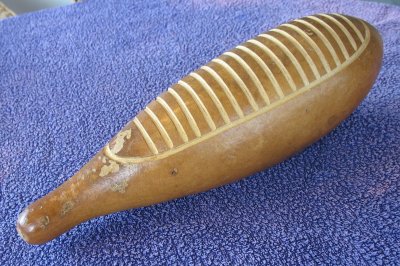
The güiro is central to danzón, cha-cha-chá, son, and salsa, and is a standard feature of charanga orchestras that popularized Cuban dance music in the 20th century.
Lees meer >Origins
Inventor: Bartolomeo Cristofori (1655–1731), an Italian instrument maker in Florence.
Date: Around 1700, Cristofori built the first instrument he called a “gravicembalo col piano e forte” — meaning harpsichord with soft and loud.
Lees meer >Timba, the explosive and rhythmically rich genre of Cuban dance music, transformed how the bass functions in popular music. In Timba, the bass is not just foundational — it’s fiery, funky, and free.
Lees meer >Dances
- Danzón – The quintessential Cuban ballroom dance, elegant and formal, often seen as the "national dance of Cuba."
- Danzonete – A sung variant of danzón that became popular in the 1920s–30s.
- Cha-cha-chá – Created in the 1950s by Enrique Jorrín while playing with a charanga; specifically designed for charanga orchestras.
- Pachanga – A playful dance and rhythm from the late 1950s/early 1960s, closely linked to charanga bands.
- Mambo (in its earlier Cuban form) – Before the big-band New York mambo, charangas also played early mambo-style danzones.
- Charanga is a Cuban ensemble style and musical tradition that dates back to the early 20th century. It became especially popular in the 1940s–50s and played a crucial role in the evolution of salsa, timba, and Latin jazz.
Lees meer >Mambo
In Cuban music, especially in salsa and son,
the " mambo" section typically refers to a brassy, rhythmically intense instrumental break,
often featuring repetitive horn lines, call-and-response patterns, and building energy toward the climax of a song.
- Son traditional
- Son urbano
- Son montuno
- Son moderno.
Lees meer >Mambo
In Cuban music, especially in salsa and son,
the "mambo" section typically refers to a brassy, rhythmically intense instrumental break,
often featuring repetitive horn lines, call-and-response patterns, and building energy toward the climax of a song.

The clave is a fundamental rhythmic pattern and organizing principle in Cuban music. It serves as both a musical pattern and a guiding concept, deeply rooted in Afro-Cuban traditions.
Lees meer >Origins
Inventor: Bartolomeo Cristofori (1655–1731), an Italian instrument maker in Florence.
Date: Around 1700, Cristofori built the first instrument he called a “gravicembalo col piano e forte” — meaning harpsichord with soft and loud.
Lees meer >Timba, the explosive and rhythmically rich genre of Cuban dance music, transformed how the bass functions in popular music. In Timba, the bass is not just foundational — it’s fiery, funky, and free.
Lees meer >The terms " marcha abajo" and " marcha arriba" describe different energy levels or sections within the montuno.
Lees meer >The terms "marcha abajo" and " marcha arriba" describe different energy levels or sections within the montuno.
Lees meer >Montuno
The cowbell
🛎️ 1. General Role of the Cowbell
🎹 2. Montuno Section
The montuno is the call-and-response section near the end of a salsa or son tune, where everything opens up rhythmically.
- The cowbell pattern becomes steady and driving, often the “salsa bell” pattern:
(Hits on 1, the “&” of 2, 4, and the “&” of 4)
- The bongocero switches from hand drums to cowbell at this point.
- The cowbell keeps time over the clave and supports the montuno piano pattern, bass tumbao, and horn riffs.
So:
🕐 Cowbell = timekeeper
🎹 Piano = syncopation
🎺 Horns/voices = call & response
🔻 3. Marcha Abajo (Down Section)
- Literally “march down” — this section is calmer, often before the montuno.
- The cowbell is not usually played here.
Instead, you mostly hear congas, bongos, and timbales on softer instruments like the cáscara (timbale shell pattern).
- The rhythm is more subtle, leaving space for vocals or melodic content.
So:
In marcha abajo, the cowbell rests or plays lightly (if at all), and rhythmic emphasis is on cáscara or bongó martillo.
🔺 4. Marcha Arriba (Up Section)
- “March up” — this means the groove intensifies.
- The cowbell comes in strong, providing the main pulse.
- The timbalero usually plays the large cowbell (campana), while the bongocero might play the smaller bell for contrast.
- This section is about energy and drive — dance climax.
So:
In marcha arriba, the cowbell leads the rhythm section, locking in with the bass and clave to propel the music forward.
🧭 Summary Table
| Section |
Cowbell Player |
Function |
Typical Pattern |
Energy |
| Marcha abajo |
Usually silent or light (cáscara instead) |
Keeps groove subtle |
Cáscara on timbales |
Low–Medium |
| Montuno |
Bongocero (small bell) |
Keeps steady timeline for montuno section |
Salsa bell pattern |
Medium–High |
| Marcha arriba |
Timbalero (big bell) |
Drives rhythm, peak energy |
Salsa bell (louder, heavier) |
High |
Would you like me to add rhythmic notation (in 2–3 and 3–2 clave alignment) for each section’s cowbell pattern? That can make it easier to visualize how it fits with the rest of the rhythm section.

