Casa de la Música - place
Casa de la Música is the premier live music venue in Havana for contemporary Cuban dance music. With locations in Miramar and Centro Habana, it became the central stage for Timba in the 1990s and remains essential to Havana's live music scene.
During the 1990s — the Special Period following the Soviet collapse — Casa de la Música became the heartbeat of the Timba explosion. The major bands of the era performed here regularly:
- NG La Banda (El Tosco's group, pioneers of Timba)
- Bamboleo
- Charanga Habanera
- Paulito FG
- Manolín "El Médico de la Salsa"
The venue's format — live band, dancing audience, intense crowd–band interaction — was perfectly suited to Timba's call-and-response energy. The musicians would direct the dancers, the dancers would push the band, and the music escalated in real time.
Two Locations
- Miramar — the larger of the two, associated with international-level shows
- Centro Habana — more neighborhood-level, rawer energy
Significance for Dancers
For dancers studying Cuban popular dance, Casa de la Música represents the ideal context: social dancing to live Timba, where the band communicates directly with the floor and the despelote style evolved organically.
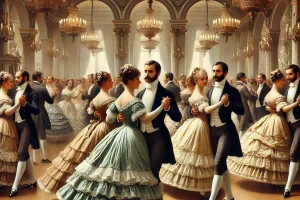
La contradanza fue la primera forma de danza de origen europeo que echó raíces en Cuba y comenzó a transformarse bajo la influencia africana. Es el punto de partida del linaje del baile de salón cubano que eventualmente produciría el danzón, el mambo y el cha-cha-chá.
Lees meer >El danzón fue el primer baile nacional de Cuba — la forma que unificó la identidad de la música popular cubana a finales del siglo XIX y principios del XX, y el antepasado del mambo, el cha-cha-chá y, en última instancia, la timba.
Lees meer > Timba is the music this site is dedicated to exploring. It emerged as a distinct genre in the late 1980s and crystallized in the early 1990s — born in a moment of social crisis, built on the full accumulated history of Cuban music, and still evolving today.
Lees meer > Timba is the music this site is dedicated to exploring. It emerged as a distinct genre in the late 1980s and crystallized in the early 1990s — born in a moment of social crisis, built on the full accumulated history of Cuban music, and still evolving today.
Lees meer >La Rumba es la más arraigada en lo africano de todas las formas de música y danza cubanas — nacida en las calles, los patios y los muelles de La Habana y Matanzas a finales del siglo XIX, sin instrumentos europeos, sin ambiente de salón y sin pretensión alguna de decoro europeo.
Lees meer > Despelote es el estilo de baile individual más explosivo en la timba — una liberación total de energía corporal que ocurre durante las secciones de bomba de alta intensidad de una canción de timba.
Lees meer >Un género de música popular bailable cubana que surgió en los años 1980–90
- Surgió en los años 1980–90
- Influenciado por el songo, la rumba, el funk, el blues, el jazz, el pop, el rock y los ritmos afrocubanos.
- Conocido por sus complejos cambios de ritmo, líneas de bajo agresivas y alta energía que impulsan a los bailadores a improvisar.
Lees meer >