miguel-failde - pioneer
Error: Invalid Frontmatter
Path: /app/www/public/user/pages/03.music/06.Pioneers/01.miguel-failde/pioneer.en.md
Failed to read /app/www/public/user/pages/03.music/06.Pioneers/01.miguel-failde/pioneer.en.md: Unable to parse at line 1 (near " title: Miguel Failde").
 ---
 title: Miguel Failde
 ---

**Miguel Faílde Pérez** (1852–1921) was a Cuban musician, composer, and bandleader from **    Matanzas** who composed the first recognized **  danzón** —   Cuba's national dance music — in 1879. His composition *"Las Alturas de Simpson"* marks the formal beginning of the   danzón as a distinct genre and one of the foundational moments in Cuban music history.

<!--more-->

## Background

Faílde was born on October 18, 1852, in     Matanzas, the port city on   Cuba's northern coast that served as one of the most important centers of Afro-Cuban cultural life in the 19th century.     Matanzas was a hub of sugar production, a city with a large enslaved and free Black population, and the birthplace of several of   Cuba's most significant Afro-Cuban musical and religious traditions — including   Rumba and the Lucumí (  Yoruba) ceremonial music that would become Santería.

He trained as a musician in     Matanzas and led his own *orquesta típica* — the large dance band format of the era, featuring   brass, violins,   piano, and   percussion. These orchestras played at the dance salons, social clubs, and public events that were central to colonial Cuban society.

---

## "Las Alturas de Simpson" and the Birth of   Danzón

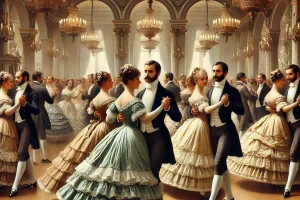
On **January 1, 1879**, Faílde premiered *"Las Alturas de Simpson"* at the Club Liceo in     Matanzas. The composition was named after a neighborhood in     Matanzas, and its premiere is considered the birth of the   danzón as a formal genre.

The   danzón evolved from the **  contradanza** (Cuban contradance), which itself was a Cuban adaptation of the French *  contredanse*, transformed by Afro-Cuban rhythmic sensibilities over the course of the 18th and early 19th centuries. What Faílde created was a new, more elaborate structure that added a crucial new section to the   contradanza form.

The key innovation was the final section — later called the **nuevo ritmo** or *estribillo* (refrain) section — in which the ensemble played an improvisatory, rhythmically active passage with a distinctly Afro-Cuban character. This section broke from the more formal, European character of the earlier   contradanza and gave the music a new momentum and expressiveness that audiences immediately recognized as something different.

The structure Faílde established became the template for all subsequent   danzón:
1. **Paseo** (introduction) — full ensemble, repeated
2. **Clarinet section** — melodic theme
3. **  Violin section** — melodic theme
4. **Nuevo ritmo section** — the climactic, rhythmically active final section

---

## Why It Was Revolutionary

The   danzón's significance in 1879 was not merely musical. It was social.

Cuban society of the late 19th century was racially stratified and politically volatile — the Ten Years' War (1868–1878) had just ended, slavery would not be fully abolished until 1886, and Cuban identity was being actively contested. The   danzón embodied a Cuban (rather than purely Spanish or French-colonial) musical identity, blending European formal structures with Afro-Cuban rhythmic life.

The dance that accompanied it — partners in close embrace, moving in small, contained steps with subtle hip movement — was considered scandalous by conservative elements and defended fiercely by Cubans who saw it as an expression of national character. The   danzón's sensuality was mild by later standards, but in 1879   Havana and     Matanzas, it represented a social challenge.

---

## Legacy

Faílde's invention set the trajectory for Cuban popular dance music for the next century. The   danzón itself evolved continuously:
- The **  danzonete** (1929, Aniceto Díaz) added vocals
- The **danzón-mambo** (late 1930s–40s, Orestes López, Arcaño y sus Maravillas) electrified the final section with syncopated jazz influences
- The **  mambo** (Pérez Prado) and the **  cha-cha-chá** (Enrique Jorrín) both grew from the   danzón's final section

Without Faílde's 1879 composition, this entire lineage of Cuban music would have taken a different path. He is honored in     Matanzas with a monument, and *"Las Alturas de Simpson"* remains the foundational text of Cuban dance music.

Miguel Faílde died in     Matanzas on April 26, 1921, having lived to see the music he created become the national dance of the country he loved.